

Mint Conditions
A display of United States quarters brings back memories of an extraordinary group of federal employees in Colorado.

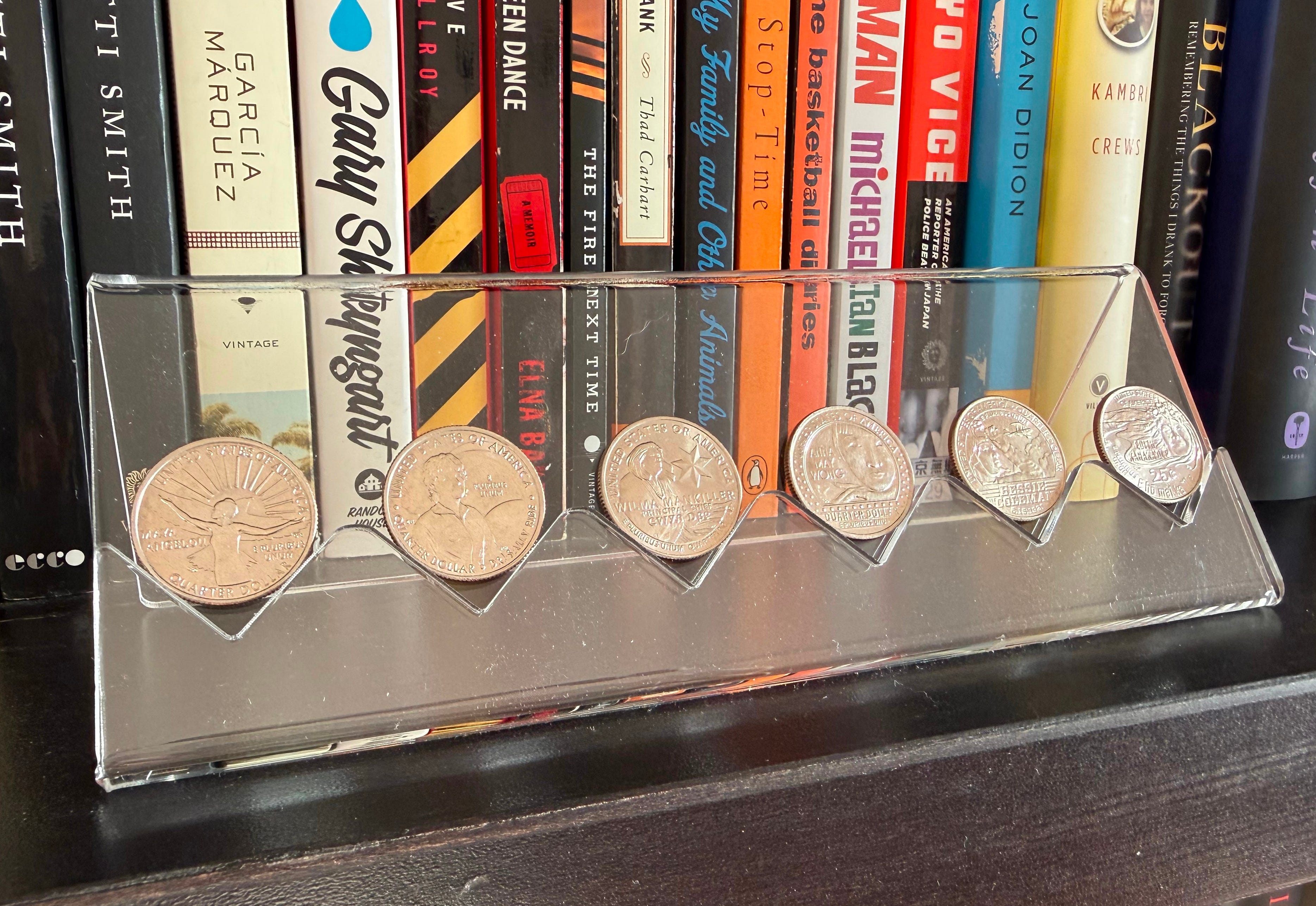
I was sad to learn a couple of months ago that the Trump administration has canceled three of the five commemorative U.S. quarters that were supposed to be issued in 2026:
Quarters that were meant to honor the abolition of slavery, women’s suffrage, and the civil rights movement will no longer be produced, The Wall Street Journal reports. Instead, the Treasury Department will replace those with designs honoring the Mayflower, the Revolutionary War, and the Gettysburg Address.
One of the scrapped designs would have featured Frederick Douglass, while the other two would have featured a women’s suffrage marcher and school integration icon Ruby Bridges. This comes despite a law passed during the first Trump administration that requires at least one quarter released for the country’s semiquincentennial to commemorate women.
I feel a small personal connection to this issue, though it takes some explaining. It goes back to the year I lived in Denver, Colorado, from late 2022 to late 2023. I had an apartment near the home of my cousin C., with whom I have long been close1. She is a corporate lawyer, while her spouse Q.2 worked at the time as a lawyer for the Treasury Department.
C. and Q. had lived in Washington, D.C., for years before the pandemic made remote work feasible for them both. Their apartment was not all that far from the Capitol, and after January 6th they decided it was high time to move back west and buy a house.
When I arrived in Denver, I spent a lot of time with C. and Q., and I was finally able to get to know Q. better. It turned out they and I shared many interests, including dogs, whiskey, martial arts movies, science, politics, and travel. (A regret of mine is that a family reunion3 prevented me from accompanying Q. on a trip to France that summer.) We toured distilleries, threw a couple of dinner parties, and even took a stirred cocktail making class together at Death & Co. Denver4. They became one of my best friends.
All the while, Q. was still working for the federal government, taking on greater and greater responsibilities. Even under the Biden administration, things were not as rosy for queer employees as you might expect. In fact, one of Q.’s biggest accomplishments at Treasury—pushed through despite opposition both passive and hostile—was the implementation of a more detailed and expansive policy on the treatment of LGBTQ+ employees than covered the government generally. It affirmed, among other things, the right of Treasury workers to specify the name under which they chose to identify5. I remember toasting Q. with some very fine whiskey on the day Secretary Janet Yellen approved the policy.
As you can see, Q. was deeply involved in issues of concern to their community, and was always looking for ways to support and nurture their peers. Chatting on a message board for federal employees in the Denver region, Q. and a few other people came up with the idea of a monthly LGBTQ+ meetup where folks who worked in a wide variety of government agencies and services could get together, have a beer, and talk about the kinds of challenges they faced every day in their jobs.
Q. organized the first meetup to test the idea. They were excited but (like me) had a certain amount of social anxiety. C. was unable to go with them because of work, so Q. asked me if I would tag along.
“But I don’t work for the government,” I said. “Will I even be welcome?”
I was really asking if a cisgendered straight dude would be welcome at the meetup. It was a needy question, and Q. knew it. They rolled their eyes at me.
“Of course you will,” they said. “But more importantly, I need my security blanket.”
That settled it. “Then I’m all in.”
If I recall correctly, that first meetup took place at Blush & Blu, a venerable lesbian bar on Colfax which has since closed. Only about half a dozen folks were invited, but everyone seems to have a good time, myself included. Q. introduced me as their “ride or die,” and I was accepted just like that. We stayed a little longer (and taxied home a little tipsier) than we had probably intended. The evening had been a success.
More people made it out the next month, and even more the month after that, each time at a different women-owned establishment. I met and chatted with a lot of very interesting people—folks from the Treasury Department, the Department of Justice, the Department of Education, the Department of Agriculture, the Forest Service, the U.S. Geological Survey, Internal Revenue, and more.
These were dedicated employees who loved what they did, and who did it despite the difficulties they often faced on the job just for being who they were. It was humbling to hear their enthusiasm for their work, and I left every meetup grateful that people like them were in the trenches not just fighting for their own rights and dignity but doing their damnedest to make our country a better place to live.
One person in particular, whom I’ll call G.6, I recall vividly. G. was an older woman who could not have been more proud to discuss her work at the U.S. Mint. In fact, at her own expense, she had brought with her more than a dozen sets of six of the quarters the Mint had issued as part of its new American Women Quarters Program. She distributed the coins to anyone who wanted a set, thrilled to share the fact that the government was finally doing something concrete to recognize a few trailblazing women from American history.
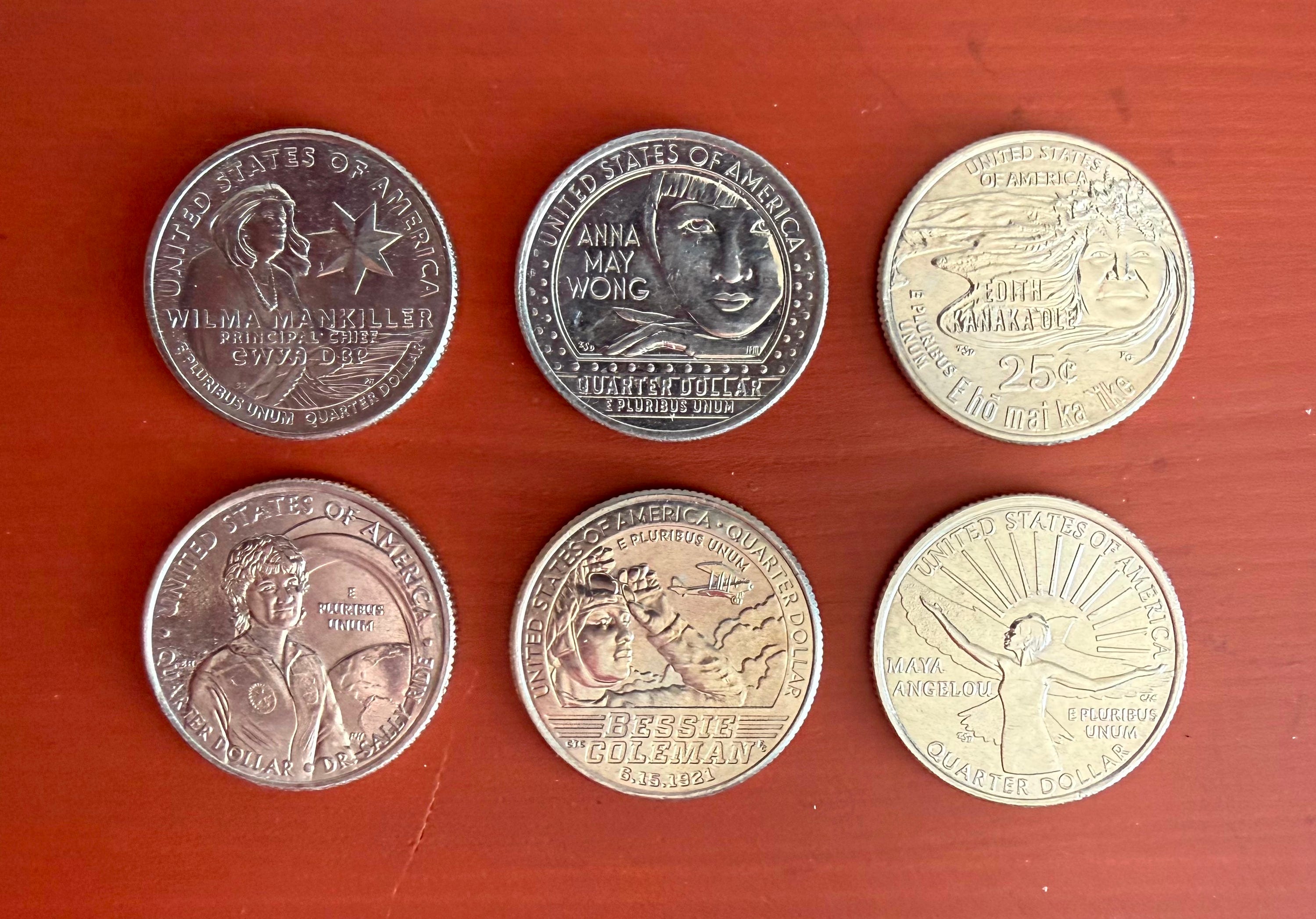
I was only able to make it out to the first three meetups. Travel plans interfered with the next two, and then I busy getting ready to move out of Colorado. As I was packing, I took special care not to lose the quarters from G. They sit now in a display rack on a shelf in my office, a reminder not just of the good people I met in Denver but that the federal government is largely staffed by committed civil servants who want to work for a better nation, despite the obstacles that might present to them personally.
Or was, I should say. Q., for one, saw the writing on the wall long before the vandals and marauders of DOGE arrived to put a stop to those good intentions. When the buyout offer came, Q. took the severance package and packed out. I don’t blame them one bit for that. When I look at those quarters now, I wonder how many of the people from those meetups did the same, faced with a workplace environment even more hostile than it had been before. I wonder how many of them stayed, and I wonder if they’re okay.
I wonder what we’ve lost as a nation when we drive the best of our civil service out of their jobs. I wonder what kind of people would celebrate an injury of that magnitude and call it an improvement.
Actually, I don’t need to wonder. I know. It’s the same kind of cowardly bullies who are afraid of putting women and Black Americans on the backs of quarters. ∅
C. and I became compatriots and family black sheep as we each struggled our way free of the influence of the LDS Church. That’s a story for another day, but it certainly creates a bond.
I will use they/them pronouns for Q., not because it’s necessarily how they identify but because I hesitate to be more specific in this political environment.
The other side of the family.
On the shortlist of my favorite places on earth.
I contributed to the practical implementation of this aspect of the policy in a very small way. Q. was explaining to me how hard it was to get buy-in from department heads who complained that people changing their names would cause mass confusion on paperwork of all kinds. I armed Q. with a concept from data science, the idea of a “globally unique identifier”—a distinct string of letters and/or numbers you might associate with an employee to help distinguish them even if their name changed. Concerned friends in government, I’m pleased to introduce to you … the Social Security number. Use it responsibly.
I don’t know if she presented this way at work, but she presented as a woman at the meetup and specified “she/her” as her pronouns.
Love this. Me and coins go way back -- I still have my prized collection of steel pennies, Indian head pennies, Buffalo nickels, and of course the ever-valuable <=1964 dimes, quarters, half-dollars (Kennedy!), and huge-ass Ike dollars. It's so great to hear about the people behind the governmental currency that eventually become keepsakes. And super sad that so many are most likely gone.
When I worked at our family business (gift shop) in the early 80s, I occasionally got very old bills and coins -- those pre-1964s were fairly common, believe it or not. Silver has skyrocketed in price lately -- I should probably sell my coins!
Really powerful piece showing how symbolic acts like canceling quarters reflect much deeper institutional shifts. The connection between commemorative programs getting scrapped and actual civil servants being pushed out is spot on. Ive seen similar patterns where surface level changes signal bigger ideological purges underneath. The part about Q's policy work on employee identificaton shows how much effort goes into basic dignty protections that most people take for granted.